The I Ching’s Insight: Unpacking the Gaza Humanitarian Crisis Through Four Ancient Hexagrams
- By YOWAYOW
As news breaks of the Israeli military intercepting the latest global aid flotilla bound for Gaza, we find ourselves confronting yet another chapter in this protracted humanitarian tragedy. The cycle seems endless: attempts to deliver essential supplies are blocked, political rhetoric intensifies, and civilian suffering deepens.
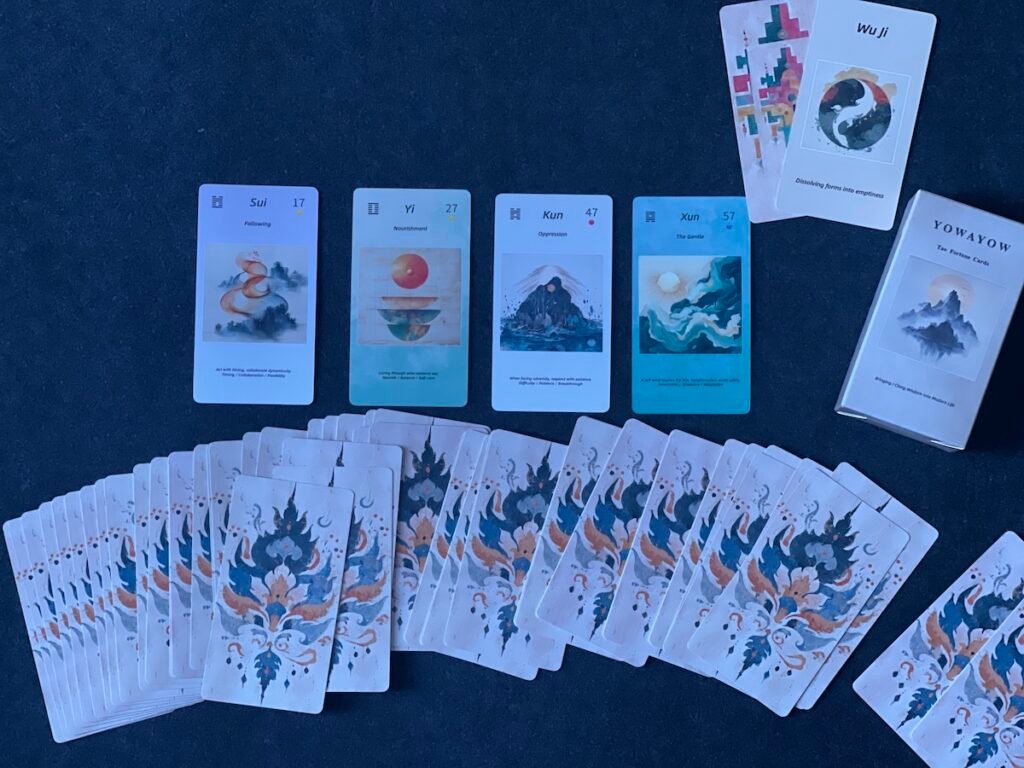
In seeking perspective beyond conventional political analysis, I turned to the ancient wisdom of the I Ching, or Book of Changes, consulting this timeless text for insight into Gaza’s humanitarian catastrophe. The four hexagrams that emerged—Following (随), Nourishment (颐), Limitation (困), and Penetrating Wind (巽)—paint a compelling portrait of both the crisis and potential pathways forward.
The Four Hexagrams: Ancient Symbols for a Modern Crisis
Following (随): The Path of Cooperation
The Hexagram of Following depicts thunder beneath lake, suggesting movement within joy. Its essence lies in adaptation, connection, and the wisdom of following natural timing.
Applied to Gaza, this hexagram speaks to the critical need for all parties to find ways to work in concert rather than conflict. The current dynamic—where Israel maintains strict blockades while aid organizations attempt to breach them—represents the opposite of “following.” True resolution requires listening, understanding legitimate security concerns while honoring humanitarian imperatives, and discovering channels for cooperation that serve all interests.
Nourishment (颐): The Right to Sustenance
Nourishment shows mountain above thunder, depicting stillness guarding movement. This hexagram concerns the fundamentals of life: nourishment, self-care, and the conditions necessary for survival and flourishing.
Gaza’s current reality stands in stark contrast to this hexagram’s wisdom. With basic supplies routinely blocked, the population cannot possibly achieve the “self-sufficient nourishment” the hexagram advocates. When political considerations override fundamental human needs, we violate the principle of Nourishment at our collective peril. The hexagram reminds us that sustainable solutions must enable, not obstruct, people’s capacity to care for themselves.
Limitation (困): The Reality of Constraint
Limitation presents lake above water, portraying a lake drained and exhausted. This image perfectly captures Gaza’s predicament: resources depleted, opportunities constrained, hope diminished.
The hexagram acknowledges the reality of limitation while suggesting that even in constraint, perseverance can lead to breakthrough. For aid workers and Gaza’s residents, this “perseverance in purpose” is visible daily in their determined efforts to survive and maintain dignity. The hexagram’s warning about “words that find no belief” reflects the current communication breakdown where appeals from all sides fail to generate trust or movement.
Penetrating Wind (巽): The Way of Gentle Influence
Penetrating Wind shows wind above wind, representing gentle but persistent force that eventually reaches everywhere. This hexagram advises flexible, adaptive approaches that work around obstacles rather than confronting them directly.
For the Gaza situation, Penetrating Wind suggests the potential of more nuanced strategies. Instead of direct confrontations that invite blockage, perhaps more dispersed, diplomatic, or creative approaches could gradually create openings. Like wind that eventually penetrates every crack, sustained gentle pressure through multiple channels may prove more effective than singular dramatic gestures.
A Path Forward: From Constraint to Resolution
Together, these four hexagrams outline a natural progression from recognizing our current limitations, through adopting more flexible approaches, toward building cooperation, and ultimately restoring conditions for nourishment and flourishing.
The sequence begins with honestly acknowledging the reality of Limitation—the entrenched positions, the valid concerns, the human costs. From there, Penetrating Wind suggests shifting from confrontation to subtle, persistent influence. Following then points toward finding points of alignment and cooperation between opposing interests. Finally, Nourishment reminds us that any lasting solution must enable the basic human capacity for self-sustenance.
This ancient Chinese wisdom doesn’t offer a political solution, but it does provide a timeless framework for understanding and addressing even the most intractable modern conflicts. The patterns of conflict and resolution, of blockage and flow, remain remarkably consistent across centuries and cultures.
Perhaps these four hexagrams can help us see beyond the immediate political stalemate to the deeper human realities and possibilities. The situation in Gaza tests not just our political creativity but our fundamental humanity—our capacity to honor both security and sustenance, both fear and hope, both particular identities and our shared human destiny.
In the enduring wisdom of the I Ching, even the most constrained situation contains the seeds of its own transformation. Our challenge is to nurture those seeds with patience, wisdom, and unwavering commitment to the fundamental principle of nourishment for all.
Want to explore more cards?
See the full list of I Ching Hexagrams →
All predictions and interpretations on this site are purely for entertainment purposes and should not be taken seriously.
If you have a personal question or dilemma, you’re welcome to submit it.
We choose a few questions to respond to from time to time. Some of these may be featured on our blog, anonymously.
Please note:
Not every question will receive a response.
There is no cost to submit a question.
Responses are intended to inspire reflection, not provide absolute answers.
If selected, your question may be shared on the site, without any identifying information.
Submit your question via email: ask@yowayow.com
By submitting, you agree that your question may be used for public exploration on our site, anonymously and respectfully.